What the Bicycle Snake Really Connects
General / Jul 1, 2026 / 3 min read
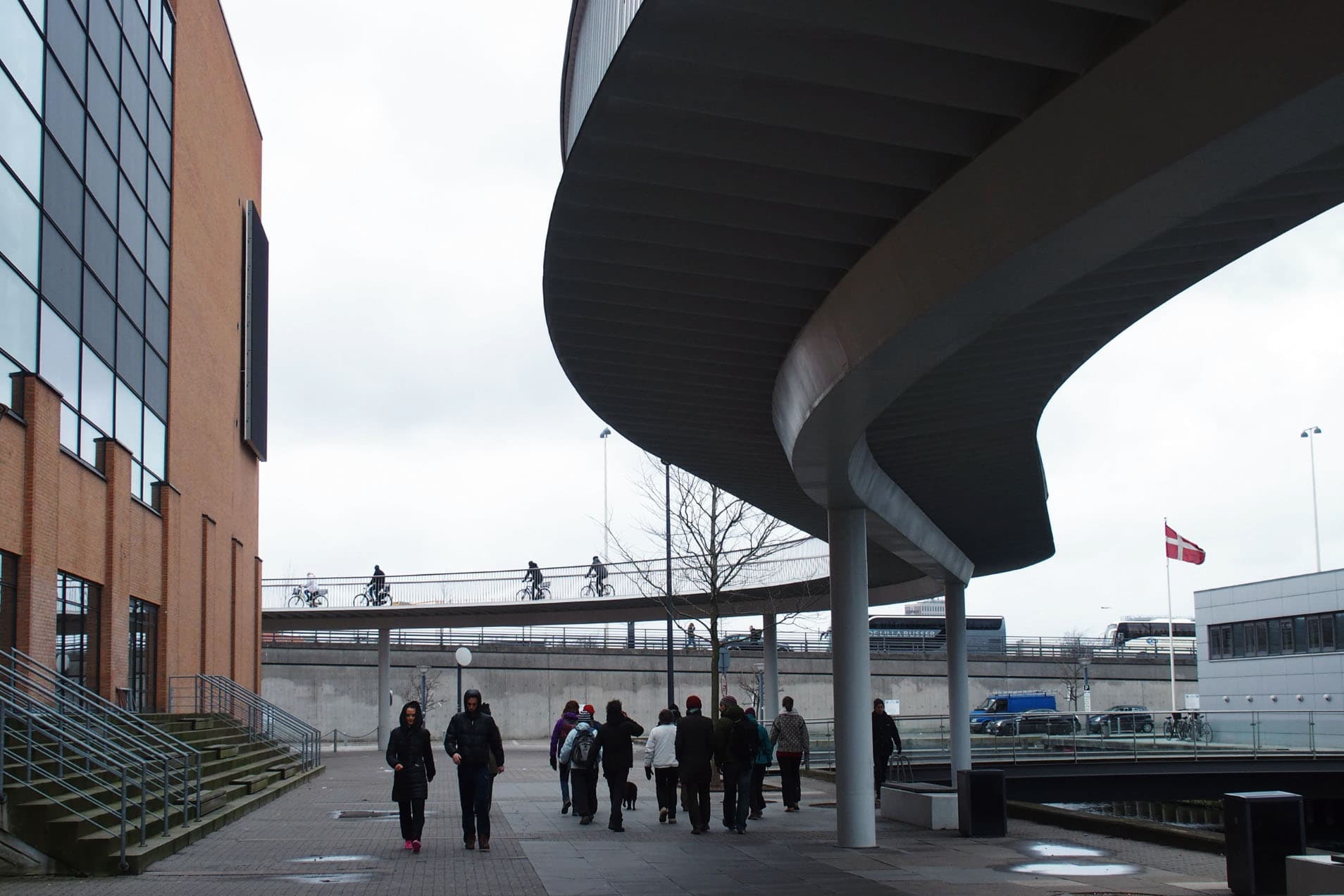
Cykelslangen looks almost too pleased with itself. It is bright orange, lifted over the harbor, and curved just enough to make the nickname obvious. The Bicycle Snake is a name the bridge earns immediately. A city can get very smug very quickly when it builds something this photogenic for cyclists.
The better story is smaller than that. Before the bridge opened, a rider coming off Bryggebroen toward Fisketorvet hit a dumb little problem. The city had a good bicycle route in one direction and a waterfront path in another, but the connection between them was clumsy. Stairs, pedestrians, storefront backs, and the edge of the quay all arrived at once. The trip did not become impossible. It became annoying in the way that makes people stop trusting a route.
That kind of annoyance is design, too. It is where daily trust in a route gets made.
Cykelslangen fixes that annoyance with more care than the problem seems to deserve. Dissing+Weitling lists the bridge at 230 meters, with a slender welded-steel structure and a transparent parapet. ArchDaily's project description notes the orange surface, lighting, and elevated harbor view. Those are not decorative afterthoughts. They make the shortcut easy to find, pleasant to use, and separate from the pedestrian space below.
That separation matters. A bad bike route often fails at the exact moment when several people are asked to negotiate the same leftover strip of city. Someone slows down at a curb. Someone else steps into the path. A cyclist squeezes behind a delivery truck. A family stops to look at the water. None of this is dramatic, and that is why it gets underestimated. A trip can be ruined by five seconds of friction repeated every day.
Copenhagen already had the larger culture around cycling. Cykelslangen did not invent that. What it shows is how a mature cycling city keeps improving after the obvious work is done. This ramp sits at a knot in the city, so the design gives it the attention a knot deserves. It ties together a harbor bridge, a shopping center, a waterfront path, and the ordinary wish to keep moving without thinking so hard.
The bridge also avoids a familiar trap in urban design. Usefulness does not have to look dutiful. It is fun to ride because the curve gives the body a little sweep through the air. It is easy to understand because the color tells riders where to go before they arrive. It is polite because pedestrians keep the wharf. The project does not ask anyone to appreciate a policy goal before it works for them.
That may be why the Bicycle Snake has lasted so well as an image. It is not a grand argument about saving cities. It is a very specific answer to a very specific irritation. Copenhagen noticed that the city was asking cyclists to fuss their way through a gap, then built something that removed the fuss. The pleasure is not separate from the infrastructure. The pleasure is how the infrastructure tells people they belong there.
Further Reading
View the sources for this article
- Copenhagen
- cycling infrastructure
- bridges
- public space